
Michigan is the next state to set an ambitious clean energy transition goal.
The state legislature this week passed five bills facilitating a transition away from fossil fuels, one of which requires 100% carbon-free energy generation from the state’s two big utilities by 2040. The bills now head to Gov. Gretchen Whitmer, a Democrat, to be signed.
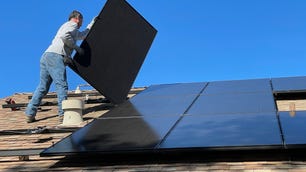
The plans include efforts to make it easier for more Michiganders to put solar panels on their roofs, eliminating potential policy hurdles for more small-scale electricity generation.
A rapid transition from burning fossil fuels to using renewable sources of energy is necessary to avoid the worst effects of climate change. Michigan joins other states with 100% clean energy goals, though on different timelines, including some fellow Midwestern states — Illinois (2045) and Minnesota (2040). Michigan’s 2040 timeline matches or beats similar goals, except Rhode Island, which aims for 100% renewables by 2033.
Can solar panels save you money?
Interested in understanding the impact solar can have on your home? Enter some basic information below, and we’ll instantly provide a free estimate of your energy savings.
Currently, natural gas and coal make up most of Michigan’s electricity generation, while nuclear and renewables make up a combined 34%. That portion will need to grow rapidly to meet the 2040 goal. (Natural gas with carbon capture will count toward the new “clean energy” goal, too.)
Whitmer, who is likely to sign the bills, called them “common sense amendments,” in a statement Wednesday.
Besides mandating a transition to clean energy, the bills include provisions that require utilities to address wasted energy and encourage consumers to switch from gas to electricity. They also raise an existing cap on small solar panel arrays and adjust how owners of solar panels are compensated for energy sent back to the grid.
Another provision shifts the power to approve large wind and solar projects to the state, away from local control. While this could speed up the approval process, it comes with its own set of hazards.
It “will require very thoughtful decision-making processes by the [Michigan Public Service Commission]. The state overruling local concerns could backfire and lead to a voter-driven reversal in the legislation, ultimately slowing down a clean energy transition,” Todd Allen, a professor of nuclear engineering and radiological sciences at the University of Michigan, said in a statement.
Deja un comentario